Post by Category : Uncategorized

The pressures and pleasures of academic freedom: How agency bridges the gap  0

The pressures and pleasures of academic freedom: How agency bridges the gap

In recent years, the conversation around academic freedom has often centered on political pressure, censorship, or institutional overreach (Darian-Smith, 2025). These are important concerns, yet they tell only part of the story. Academic freedom is not just a matter of external defense; it is also an academic’s internal experience and responsibility. It shapes how academics live their professional lives, relate to their work, and sustain their mental health. Academic freedom is protected by law (Altbach, 2001; Karran, 2009), but this does not mean that academics find themselves in a land of milk and honey. As Karran and Mallinson (2019) emphasize, academic freedom rests on a reciprocal understanding: academics are free to explore and teach controversial and politically sensitive topics, as long as they uphold academic norms and institutional obligations. Academic freedom, thus, is both a privilege and a mission, one that brings pressures as well as pleasures. To make well-informed choices within this freedom, academics need agency, i.e., the capacity to make deliberate decisions in challenging situations. In this blog, I will argue how agency is the crucial link that bridges the gap between pressures and pleasures that come with academic freedom. While academic freedom offers the delight of intellectual exploration with students and self-directed research, it also comes with the weight of expectation, precarity, and sometimes, isolation. By cultivating agency, academics can fulfill their duty to enhance knowledge and educate students to critical free thinkers (cf. Van der Rijst, 2024) while sustaining positive emotions in their work.

Academic freedom is not the same as free speech; it is a professionally bound right
Academic freedom is a cherished principle within modern universities; a cornerstone of a well-functioning society (Darian-Smith, 2025; Whittington, 2022). At its core, academic freedom encompasses the independence to inquire, teach, and speak without undue interference. This freedom enables us to engage in critical debate and challenge the status quo, a vital function of academia. However, despite its foundational role, academic freedom is frequently misunderstood and contested. A common source of confusion lies in its conflation with the concept of free speech (Darian-Smith, 2025). While the two are closely related, they are not identical. Academic freedom is rooted in disciplinary expertise and accountability to academic peers, rather than simply the right to express personal opinions (EUA, 2025). This distinction is fundamental because academic freedom entails both rights and responsibilities. Without this distinction, academic freedom risks being mistaken for unchecked personal expression or activism, thereby weakening public trust. The tension between autonomy and accountability becomes especially pronounced when scholarship confronts societal values, ideologies, or political power. In such contexts, academics may encounter both external pressures and internal forms of censorship. Yet, the discomfort provoked by challenging prevailing norms is not a flaw of academic freedom; it is a feature. It is precisely this disruptive potential that enables academic work to serve the public good, drive progress, and hold institutions to account (EUA, 2025). It empowers academics to pursue and disseminate truth through research, teaching, and public discourse, and demands that such efforts be guided by ethical standards (Giroux, 2024; Netherlands Commission for UNESCO, 2025). As Robert M. Hutchins, former president of the University of Chicago, stated in 1935:

“Anybody who has real familiarity with higher education will not hesitate to assert that professors are not engaged in subversive teaching. They will also remind the public that professors are citizens. They are not disfranchised when they take academic posts. They therefore enjoy all the rights of free speech, free thought, and free opinion that other citizens have. No university would permit them to indoctrinate their students with their own views. No university would permit them to turn the classroom into a center of propaganda. But off the campus, outside the classroom, they may hold or express any political or economic views that it is legal for an American to express or hold. Any university would be glad to have Mr. Einstein among its professors. Would anybody suggest that he should be discharged because he is a ‘radical’?”

The pressures and pleasures of academic freedom
To understand academic freedom only as a right is to miss its deeper significance (Darian-Smith, 2025). In truth, academic freedom should be understood as a mission, a collective responsibility that carries both pressures and pleasures (cf. Altbach, 2001). It is not merely a shield against interference, but a charge to seek, generate, and share knowledge in service of the public good.

The pressures: Academic freedom as a mission
The genuine meaning of academic freedom brings with it real and enduring pressures (cf. Fuchs, 1963). When seen as a mission, academic freedom demands more than self-direction; it calls for integrity, intellectual courage, and a deep commitment to the pursuit of truth. This can be daunting.

To work under the protection of academic freedom is to be constantly invited, if not required, to interrogate conventional knowledge, confront complex problems, and produce work that may not be easily understood or universally welcomed. Academics engaged in socially relevant or politically sensitive research often find themselves under scrutiny from within the academy and outside it as well (cf. Darian-Smith, 2025; Giroux, 2024). The sense of mission can become a source of tension when external stakeholders – governments, industries, and interest groups – attempt to influence or suppress inquiry that threatens their positions. Moreover, academic freedom, rightly understood, is not a license for personal opinion but a responsibility to engage in evidence-based discourse. The duty that academic freedom insists is not light. It brings with it a unique kind of pressure: to remain intellectually honest in the face of complexity, to resist ideological influence, and to serve the public good even when doing so is inconvenient, unpopular, or even risky. Academic freedom, therefore, puts pressure on academics by the idea that academic work should be connected to societal impact and intellectual responsibility (Altbach, 2001).

The pleasures: Academic freedom calls for academics’ agency
Yet alongside the pressures academic freedom brings, it also brings pleasures. At its core, the privilege of enjoying academic freedom enables academics to show agency. Showing agency means being in charge of deliberate, meaningful choices, a process that is empowering and pleasurable, as it affirms one’s role as an active contributor to work (Vähäsantanen et al., 2020). Academic freedom opens the door to genuine intellectual exploration, allowing us to follow curiosity wherever it leads, to teach courses that challenge assumptions, and to contribute to urgent societal conversations with substance and integrity (Netherlands Commission for UNESCO, 2025).

There is immense privilege in shaping a research agenda driven by authentic questions, in designing courses that provoke real and in-depth dialogue, and in engaging students in learning that can be personally and politically transformative. Academics, in this sense, do not simply observe or comment on the world; they use their agency to help shape it by bringing evidence, nuance, and critique to society.

In my opinion, this may be one of the highest callings and most privileged roles: contributing to a better world by pursuing one’s own intellectual curiosity, while supporting and inspiring others to do the same in their own ways. Fully in line with what Darian-Smith (2025) argues, it is therefore especially alarming that entire academic disciplines are being defunded or eliminated, often on grounds of vague or economically motivated justifications. Such actions frequently result in the marginalization or silencing of research areas and critical perspectives that are essential for interrogating established power structures. The growing pattern of restricting academic inquiry (through budget cuts, policy interference, or blacklists of research topics) forms part of a broader authoritarian trend that threatens the institutional autonomy of universities. As a result, academia is increasingly being stripped of its capacity to challenge orthodoxy and fulfill its democratic responsibility.

To conclude, in defending academic freedom, we are defending much more than the rights of academics; we are safeguarding one of the essential conditions for social progress. And in cherishing the pleasures of academic freedom, we must also recognize the responsibility they entail: to use our agency not only to pursue what fascinates us, but to stand up for the values that make that pursuit possible. I leave it up to the reader to decide whether that is a pressure or a pleasure.

References

Altbach, P. G. (2001). Academic freedom: International realities and challenges. Higher Education, 41(1–2), 205–219. https://doi.org/10.1023/A:1026781906936

Darian-Smith, E. (2025). Knowledge production at a crossroads: Rising antidemocracy and diminishing academic freedom. Studies in Higher Education, 50(3), 600–614. https://doi.org/10.1080/03075079.2024.2347562

European University Association. (2025, February). How universities can protect and promote academic freedom: EUA principles and guidelineshttps://www.eua.eu

Fuchs, R. F. (1963). Academic freedom: Its basic philosophy, function, and history. Indiana University Press.

Giroux, H. A. (2024). Educators as public intellectuals and the challenge of fascism. Policy Futures in Education22(8), 1533-1539. https://doi.org/10.1177/14782103241226844

Hutchins, R. M. (1935, April 18). What is a university? In Banout, T. & Ginsburg, T. (Eds.), The Chicago canon on free inquiry and expression. The University of Chicago Press. https://www.press.uchicago.edu (ISBN 978-0-226-83781-9)

Karran, T. (2009). Academic freedom in Europe: time for a Magna Charta? Higher Education Policy22, 163-189. https://doi.org/10.1057/hep.2009.2

Karran, T., & Mallinson, L. (2019). Academic freedom and world-class universities: A virtuous circle? Higher Education Policy32, 397-417. https://doi.org/10.1057/s41307-018-0087-7

Netherlands Commission for UNESCO. (2025, May 26). Een vrije en veilige wetenschap: Vijf adviezen aan de minister voor Onderwijs, Cultuur en Wetenschap. [A free and safe science: Five recommendations to the Minister of Education, Culture and Science] (Jon Verriet, Ed.). https://www.unesco.nl/nl/publicatie/een-vrije-en-veilige-wetenschap-vijf-adviezen-aan-de-minister-voor-onderwijs-cultuur-en-wetenschap/in-het-kort

Van der Rijst, R. (2024, 13 september). On the relevance and necessity of research into higher education. Scholarly Publications. https://scholarlypublications.universiteitleiden.nl/handle/1887/4054961

Vähäsantanen, K., Paloniemi, S., Räikkönen, E., & Hökkä, P. (2020). Professional agency in a university context: Academic freedom and fetters. Teaching and Teacher Education89, 103000. https://doi.org/10.1016/j.tate.2019.103000

Whittington, K. E. (2022). Academic freedom and the mission of the universityHouston Law Review, 59(4), 821–842. https://doi.org/10.2139/ssrn.3998593

New perspectives on disciplinary literacies at the CLIL NetLE Teacher Training School  0

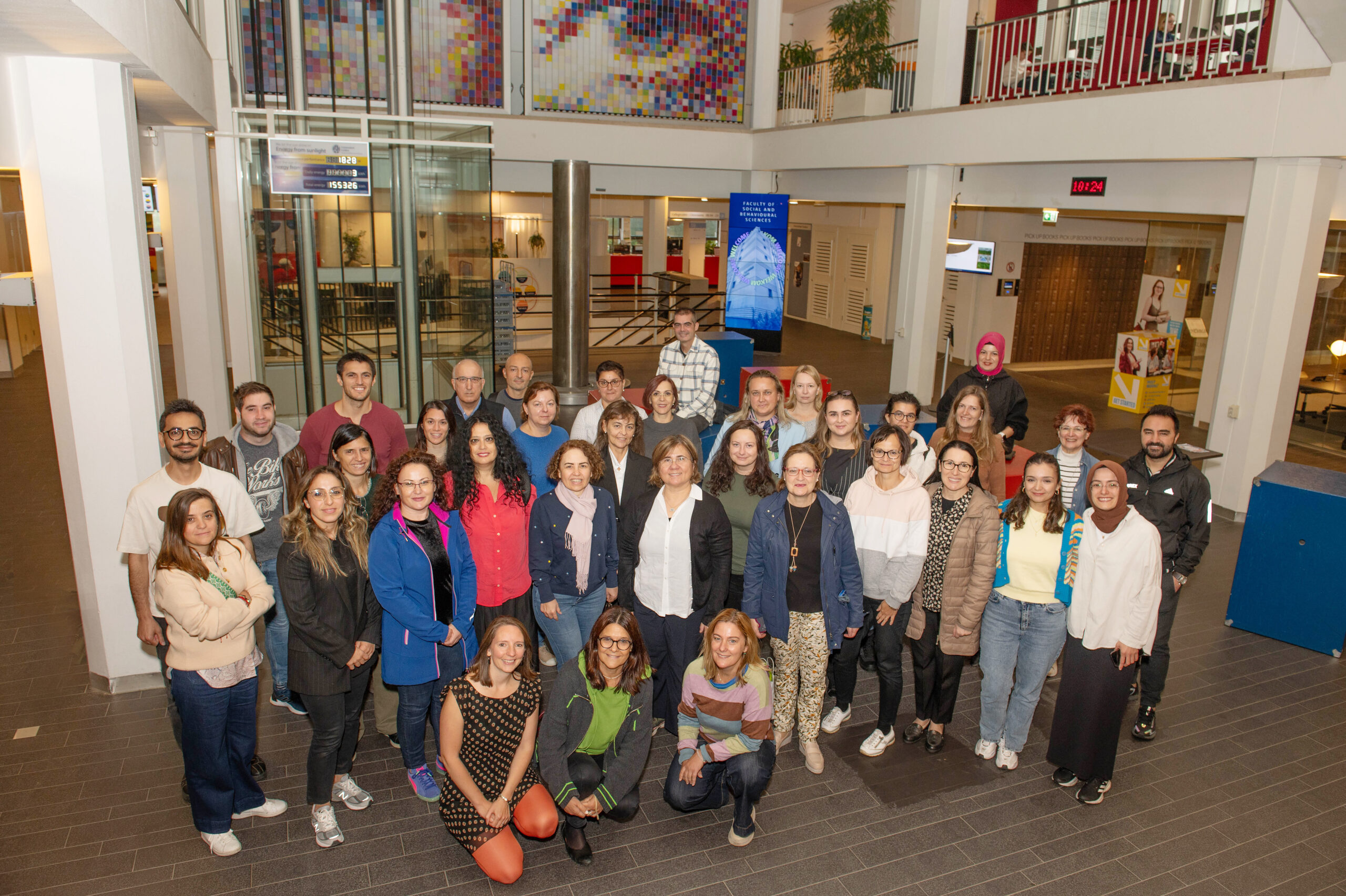
Participants of the CLIL NetLE Teacher Training School

One of the best things about being a researcher is the opportunities it provides to learn from and with colleagues from different countries and contexts. This has certainly been my experience of late, as a member of the COST action, ‘Content and Language Integrated Learning Network for Languages in Education (CLIL NetLE).

Funnily enough, the CLIL NetLE has also sparked new local connections. During the CLIL NetLE’s international Teacher Training School in Leiden, Fred Janssen (Professor of Science Education and ICLON’s Scientific Director) and I explored a question that has been bubbling under the surface for some time: Are his perspective-oriented approach and my main research and teaching interest – disciplinary literacies – actually two sides of the same coin? Or, as our former colleague, Evelyn van Kampen, once put it, are we “digging the same tunnel”?

Subject-specific thinking and knowing

Perspectives and disciplinary literacies have one crucial element in common: the conviction that teaching and learning a subject involves subject-specific thinking and knowing. In other words, learning biology means learning to think like a biologist, and to understand the beliefs and assumptions that influence that discipline.

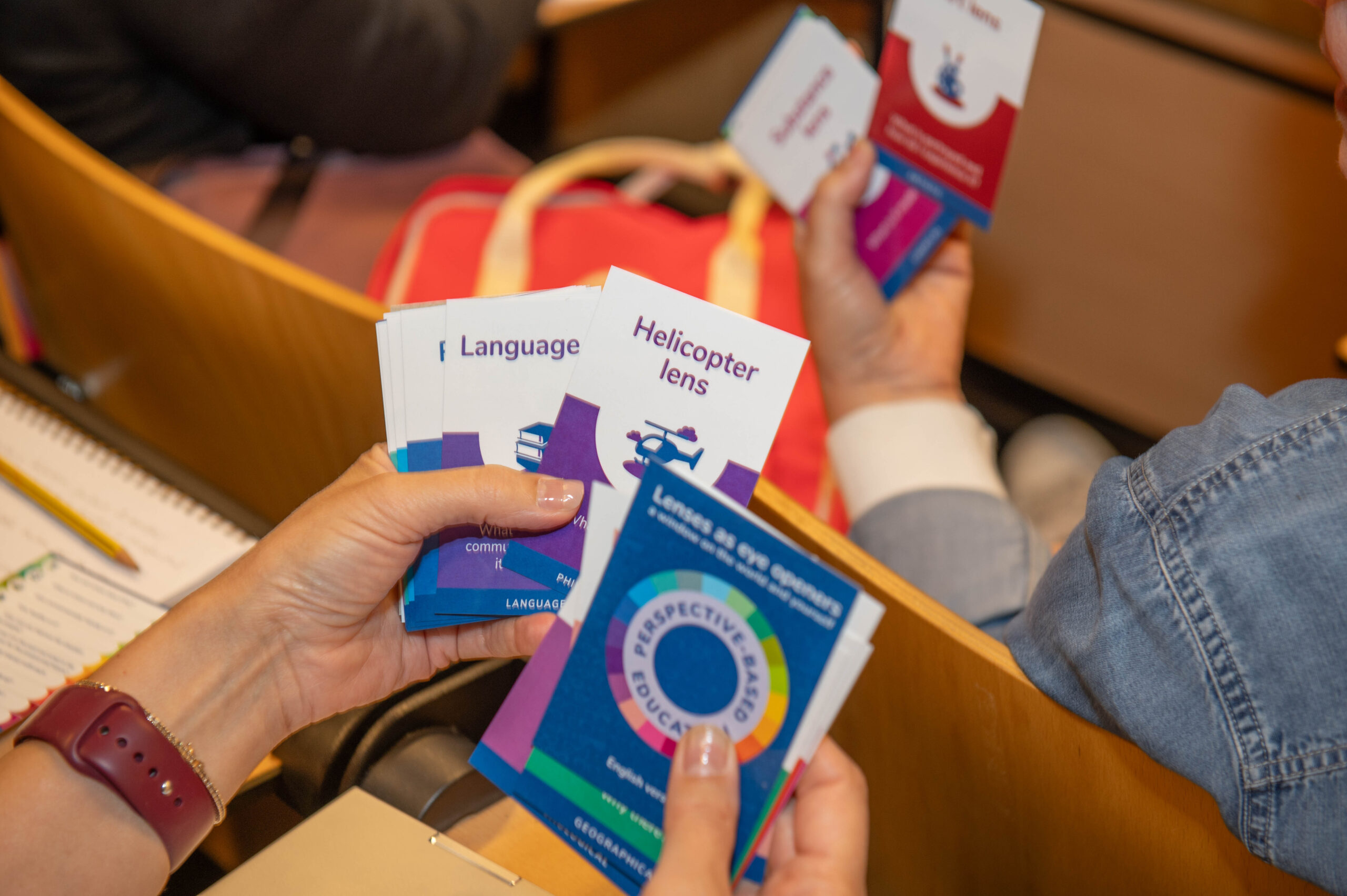
‘Lenses’ to reflect on subject content

Perspective-based education is a way to help students get a grip on complex problems by posing questions through different ‘lenses’ (perspectives). The perspectives also provide direction in searching for and testing answers. Take the nitrogen crisis, for example. To grasp this topic, you must approach it from at least biological, chemical, political-administrative and economic perspectives.

The underlying principle of disciplinary literacies is that subject-specific thinking and knowing are linked to subject-specific communication. Due to their different frames of reference a biologist and a historian will each communicate knowledge in distinct ways. Communication in each field will differ again depending on purpose, audience and context. Thus, subject-specific communication is integral to teaching and learning any subject, in any language.

Missing Cs

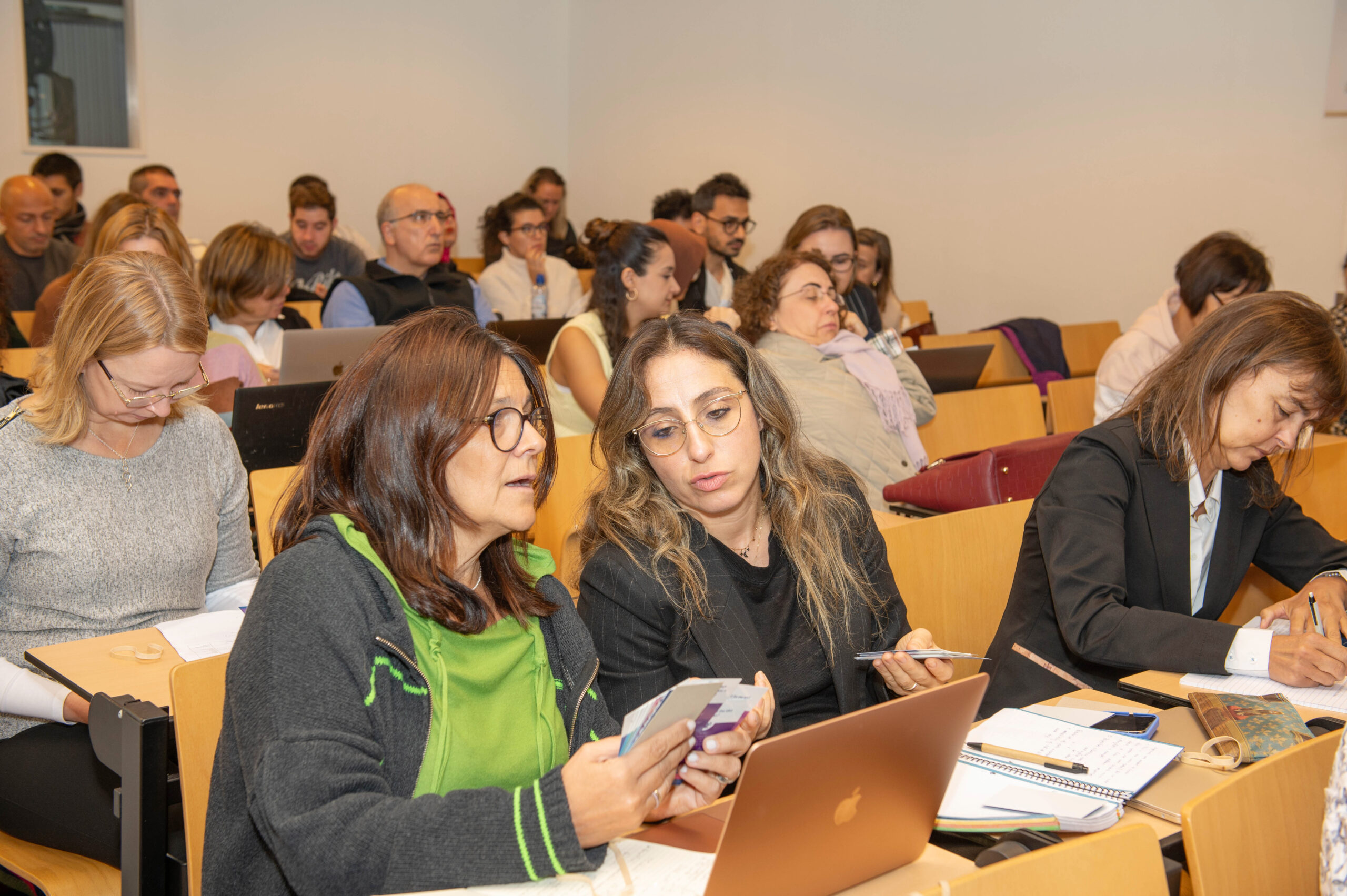
Participants reflect on subject perspectives

So what is it that keeps these two tunnels from meeting? It can help to refer a well-established model from content and language integrated learning (CLIL). According to the 4Cs (Coyle et al., 2010), subject teaching involves four key elements, which are inextricably linked with each other: Content, Communication, Cognition and Culture. Through the lens of the 4Cs, it becomes clear why the perspective-based and disciplinary literacies ‘tunnels’ have never quite met. While their core is the same, each of them is missing explicit attention for a ‘C’.

While disciplinary literacies focuses heavily on the ways Communication, Cognition and Culture interact while learning or teaching subject content, there is little explicit attention in this field to which subject-specific Content should be learned and taught.

In the perspective-based approach, choice of Content is the central issue. It relates closely to the Cognitive processes, beliefs and types of behaviour (Culture) associated with the subject. What is missing is attention for the impact these have on how we Communicate in that discipline.

A new dimension for disciplinary literacies?

Out of the tunnel and into the tree

We believe this exploration is a valuable step in bringing our respective ‘tunnels’ closer together and in opening them up further so that subject specialists can relate to and translate them into practice.

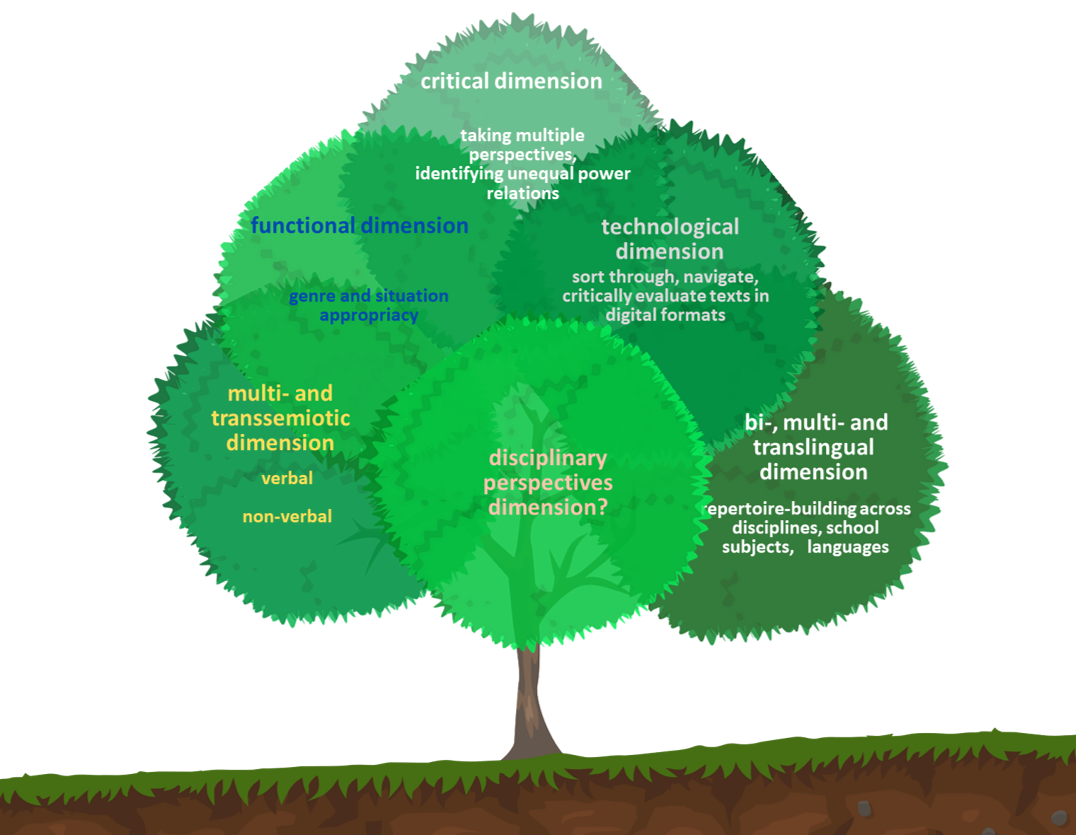
But perhaps we should get out of our tunnels altogether and breathe some fresh air. CLIL NetLE has published an initial operationalisation of bi- and multilingual disciplinary literacies. There, the concept is broken down into functional, critical, technological, multi- and transsemiotic, and bi-, multi- and translingual dimensions, depicted through the metaphor of a tree. Might there also be room in that tree for a ‘disciplinary perspectives’ dimension? This is a question we hope to explore further, both locally and with our international partners.


Sparked your interest?

  • You can find out more about the CLIL NetLE and access its outputs so far, see the CLIL NetLE website. If you are a researcher in CLIL, disciplinary literacies, subject didactics or a related area, and would like to get involved in CLIL NetLE, you can find out how here.
  • You can find more information about ICLON’s work with the perspective-based approach, including professional development and workshops for schools, here (in Dutch – fill in the contact form if you would like to discuss possibilities in English).
  • For teachers and schools looking to delve further into CLIL, disciplinary literacies or the perspectives, let us know! ICLON’s professional development department can discuss the possibilities for bespoke programmes or guest lectures.
  • Another tunnel we may want to access in this discussion is the Pluriliteracies movement, spearheaded by Do Coyle and Oliver Meyer.


Photography: Stefanie Uit Den Boogaard

Tree figure adapted from the original by Talip Gülle

From use of AI in language teaching to rhythm in second language speech production  0

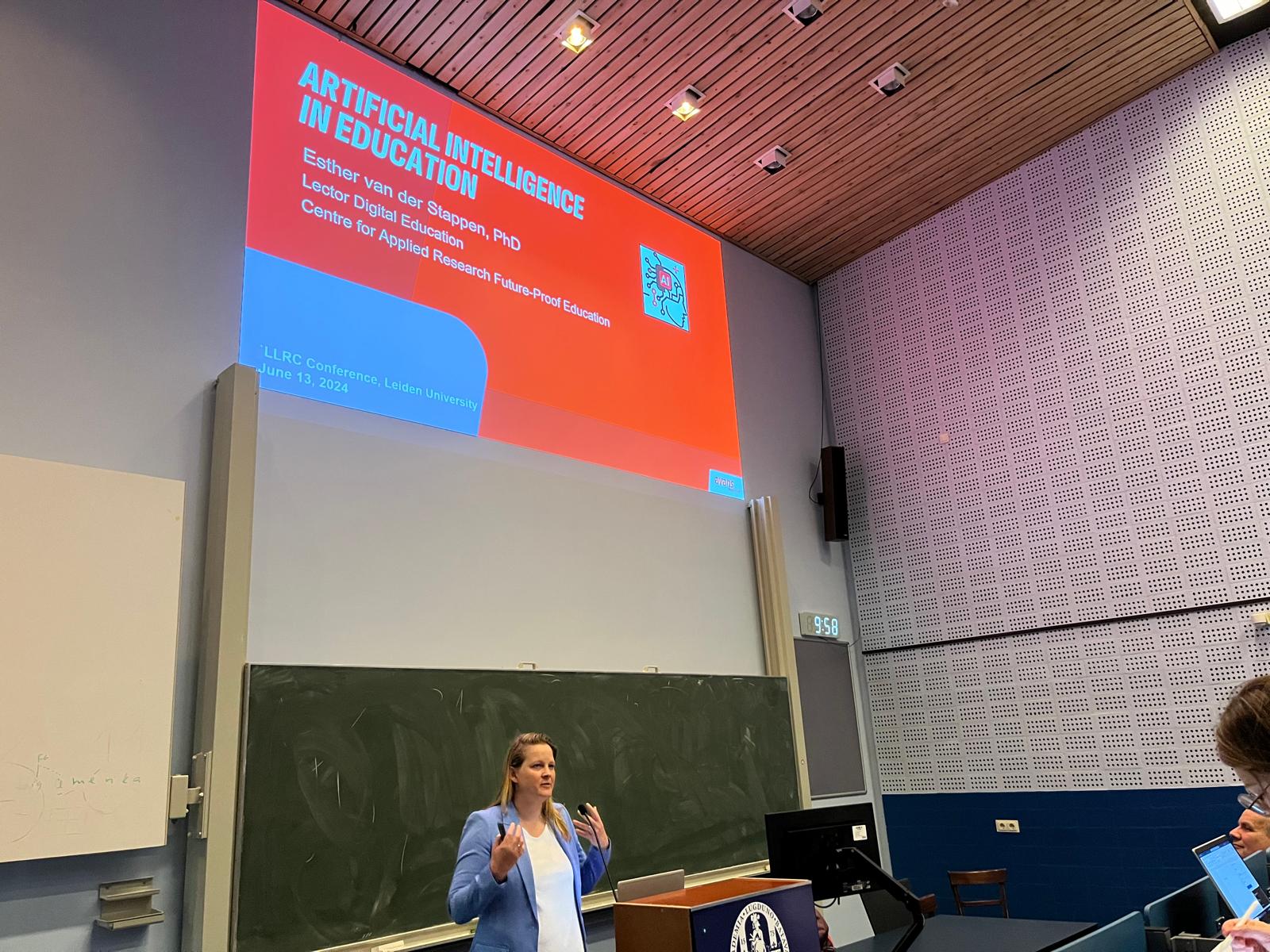
Leiden University hosted two one-day conferences on second language learning within just three weeks: the Language Learning Resource Centre’s (LLRC) yearly conference, this time on AI in language education, was held on June 13th. On July 1st there was a one-day conference on rhythm and fluency in second language speaking, as satellite workshop alongside the 2024 Speech Prosody conference. As co-organizer of these one-day events, I got to experience both maximally. It made me realize once again the breadth and wealth of language learning research.

LLRC conference on AI in language education

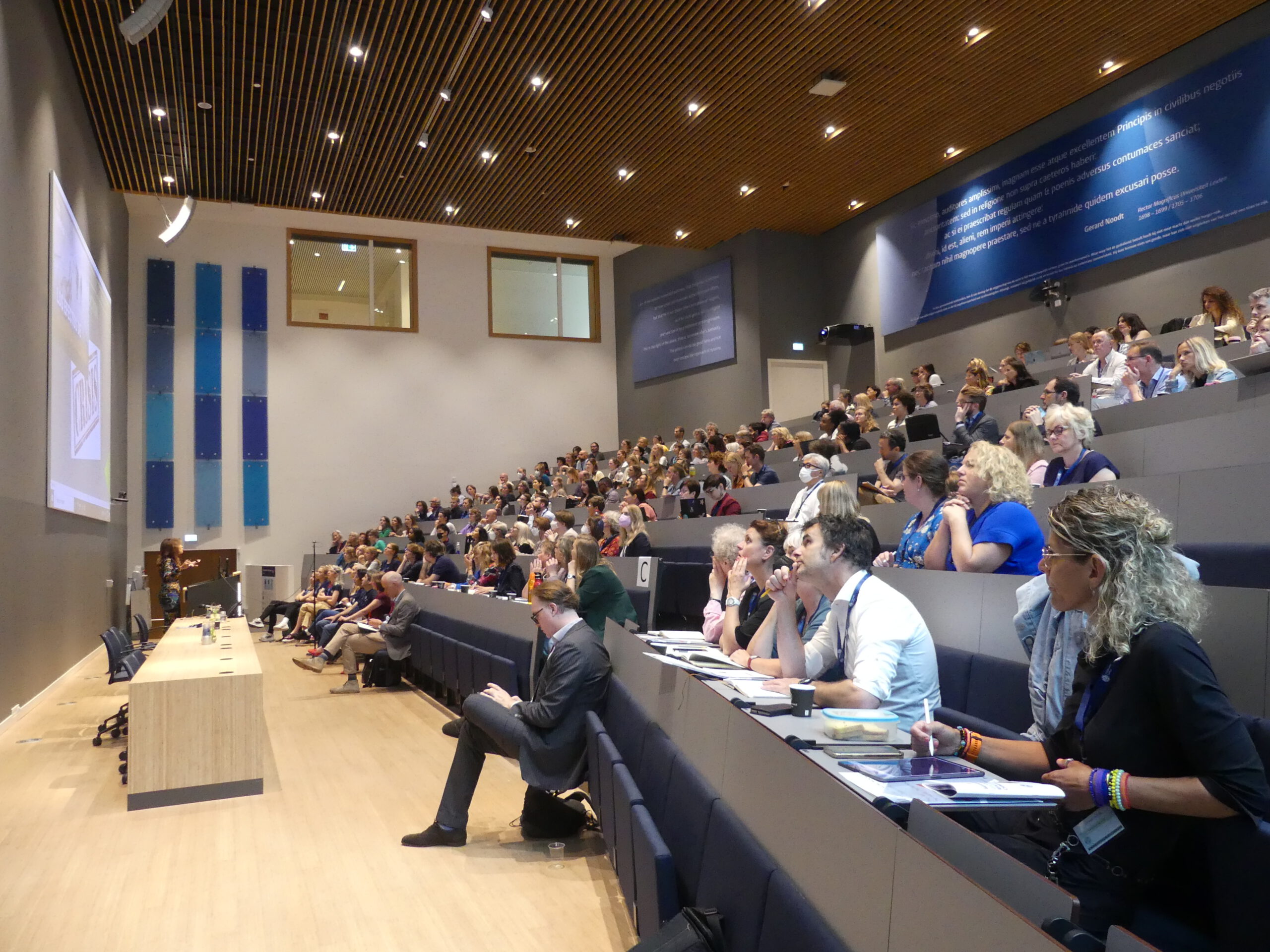
For the 7th edition of the LLRC conference, presenters from Universities, Universities of Applied Sciences, a secondary school, and a global testing company from The Netherlands and Flanders showed their research and good practices to a crowd of researchers and language teachers from a similar wide range of different institutes, schools, and companies. With 110 participants, it was the busiest edition so far. Apparently, the theme of the day struck a note. Although AI has been around since the 50’s, it is only in the last two years that LLMs and intelligent tools are quickly and drastically changing language use, language learning, and language teaching. When the LLRC committee came up with the timely theme in the fall of 2023, we did not yet know it, but it turned out that June ‘24 was proclaimed as month of AI in education in the Netherlands, with many events throughout the country, and the one by LLRC was linked to it.

AI is not artificial and it is not intelligent

The keynote speaker, Esther van der Stappen (Avans University of Applied Sciences), introduced the theme by bringing together multiple perspectives and bridging the gap between computer science and education, shedding light on practical and ethical aspects of AI in education more in general. She certainly had our attention when she explained what AI is not: it is not artificial and it is not intelligent, to begin with.

Bastogne cookies and second language learning in both conferences

A little over a fortnight later, the one-day conference on prosodic features of learners’ fluency featured two keynote speakers: Lieke van Maastricht (Radboud University) and Malte Belz (Humboldt University, Berlin). Lieke showed how the use of hand-gestures during speaking in a second language should not be ignored, and Malte showed methodological issues that need to be addressed in research on measures of fluency in speaking such as pausing and filled pauses. This conference had some similarities to the LLRC conference, but the differences were more pronounced. To start with the similarities: on both days, technological advancements and tools played a big role; on both days, Bastogne cookies were served during coffee breaks and vegetarian bitterballen at the end of the day. Obviously, the biggest resemblance between both conferences concerned the broad topic of second language learning. But where the day on AI in the language classroom showcased research and practice on language teaching didactics (using AI) in the broadest sense, the conference on prosody and fluency showed research and research methods on very specific aspects that language learners need to master, namely on hesitations and rhythm in speaking.

Making worlds meet

To advance research and practice of language teaching, both types of exchanges among researchers and teachers are helpful, and in the end, we should strive to have both types of worlds meet. For instance, it is one thing to find out that gestures like arm movements should accompany the word or sentence stress, and that second language learners have trouble in timing gestures in this way; it is another thing to teach the timing of gestures to a classroom of 30 students. And indeed, in the closing session on July 1st, three “D”’s were recognized as Big Questions or New Challenges to tackle within the subfield of prosody in linguistics: 1) Differences between individuals in speaking and learning to speak, 2) the Dynamic nature of speaking processes, and, as third “D”: Didactics. So plans to have both types of worlds meet (more often) are already in the making! 

The essential role of educational sciences for innovations in university teaching  0

Recently NWO release a new funding call for educational innovation projects, labelled “Scholarship of teaching and Learning”. This is an interesting funding opportunity for academics who would like to strengthen their teaching. Academic teachers can apply for funds to put their innovative teaching ideas into practice. And indeed this is a good opportunity to get your funding for those teaching ideas you have been waiting to implement. This also is the time to re-think your teaching and teaching ideas and put them to the test.

Read more

How are languages learned? A shared question for research at LUCL and ICLON  0

The title of this blog contains a Big Question: “How are languages learned?” I would say this is an intriguing question, considering how quickly children learn the vast amount of knowledge and skills needed for successful communication. They start with crying, giggling, and babbling some sounds, and by the age of three they are talking your heads off. This Big question is one of the fundamental questions of the broad research field of Linguistics. “How are languages learned” is also one of the big questions for practice-oriented research informing foreign language pedagogy, and the learnability question includes another relevant question for both fields: how language learning is the same or different for early versus late learners.

Fundamental questions in linguistics

If we consider the other three fundamental questions in the field of linguistics, we can even conclude that these questions are related to the first, learnability-question, and therefore also relevant for foreign language pedagogy research:

  • How do languages all over the world differ (are languages equally easy or hard to learn?);
  • how do languages change over time (how is language learning leading to language change?);
  • and how is language produced and understood in real time (how do cognitive processes lead to language learning and how are the cognitive processes the same or different for early and late language learners?).

Linguists take different angles when tackling these issues. The question about how languages differ is mainly a structural question, and linguists have described languages at different levels: from the level of sounds to the level of text or discourse organization. How and why languages change is mainly a social question, as languages change through generations, through contact between languages due to migration, and because of people’s need to belong to social groups. The question how languages are processed in real time is cognitive, where linguists investigate how and which cognitive processes are put into action, for instance for the enormous task of listening and speaking with about 5 words per second. The same structural, social, and cognitive viewpoints towards language are also relevant for research into foreign language pedagogy, to answer the more direct practice-oriented question “How to teach language?”.

A unique position for foreign language classroom research

This means that for such practice-oriented research, an enormous amount of relevant research as well as a vast tradition in research methods is available. If we would compare this to research into pedagogy of other school subjects, it becomes clear that this situation for foreign languages as school subjects is unique. Take Biology, for example. It is not the case that the research field of Biology busies itself mostly with the question “How is Biology learned?” Likewise, the main research question of History is not “How do people learn History?”, etcetera.

Practice-oriented research and fundamental research both inform foreign language pedagogy

My conclusion for this blog is that both fundamental and practice-oriented research are needed to better understand and promote language learning and teaching in the classroom. For instance, to investigate successful didactics for teaching verb forms in Spanish, researchers first need to know which verb forms are problematic and why. Or for (research into) teaching and assessing speaking skills, it is first necessary to understand the construct of speaking in a fundamental way. Because foreign language learning research is partly built upon the vast research tradition of Linguistics, I would argue that we can and must make use of this unique situation and interact with researchers who work in linguistics on the more fundamental parts of the big issues to inform practice-oriented research into foreign language teaching. At Leiden University, interaction between the Leiden University Centre for Linguistics (LUCL) at the faculty of humanities and the practice-oriented research at ICLON is already present. I hope we can make the collaboration in the future even stronger, for instance through the Language Learning Resource Centre as well as through working together as teachers on the two-year educational MA for (foreign) languages.


Digitalisering van scholen in Caribisch Nederland: een onderzoek op Bonaire, Sint Eustatius en Saba  0

Als startpunt voor verdere ontwikkeling van digitalisering van scholen in Caribisch Nederland hebben wij onderzoek gedaan naar de stand van zaken rond digitalisering op scholen op Bonaire, Sint Eustatius en Saba. Het onderzoek is uitgevoerd in een samenwerkingsverband met Kennisnet, onderzoeksbureau Oberon en een lokale onderzoeker. Aan dit onderzoek deden achttien scholen (primair onderwijs, voortgezet onderwijs en middelbaar beroepsonderwijs) mee verspreid over de eilanden. In totaal hebben 146 leraren een online vragenlijst ingevuld en hebben achttien schoolleiders, bestuurders en ict-coördinatoren deelgenomen aan een interview.

De belangrijkste bevindingen zijn hieronder weergegeven rond 5 thema’s: ict-randvoorwaarden, inzet en gebruik van ict, visie en afspraken in de school, professionalisering en ict-bekwaamheid van leraren en ervaringen tijdens de COVID19 pandemie.

Ict-randvoorwaarden

Randvoorwaarden voor het gebruik van ict in het onderwijs zijn een goedwerkende internetverbinding, verantwoordelijkheid over ict-budget, en beschikking over apparatuur en digitaal lesmateriaal. Over het algemeen blijkt dat er minder apparaten beschikbaar zijn dan er leerlingen zijn. Dit betekent dat er niet voor elke leerling een apparaat beschikbaar is en dat leerlingen dus niet allemaal op hetzelfde moment kunnen werken op een apparaat.

De verantwoordelijkheid over het ict-budget wordt op de scholen op verschillende manieren vormgegeven. Op sommige scholen is het bestuur verantwoordelijk en op andere scholen de directeur.

Elke school heeft toegang tot internet, maar de kwaliteit van de netwerkverbinding is zeer verschillend per school. Daarnaast werken veel scholen met Europees-Nederlandse methodes en software. De updates van sommige software vinden vaak plaats in de (Europees-Nederlandse) nacht, wat als gevolg heeft dat vanwege het tijdsverschil de updates in Caribisch Nederland gedurende de dag plaatsvinden. Dit verstoort het werken met deze software tijden schooluren.

Inzet en gebruik van ict in het onderwijs

Volgens leraren is het meest gebruikte digitale leermateriaal instructievideo’s. Ook wordt gebruik gemaakt van Europees-Nederlandse methodes. In tegenstelling tot de situatie in Europees Nederland wordt oefensoftware waarmee leerlingen leerstof kunnen oefenen en feedback ontvangen op Caribisch Nederland niet veel gebruikt. De reden hiervoor zou kunnen zijn dat de inhoud van deze software minder goed aansluit bij de leefwereld van leerlingen in Caribisch Nederland.

Leraren geven aan dat zij aandacht besteden aan de ontwikkeling van digitale geletterdheid van leerlingen, met name aan de domeinen mediawijsheid, digitale informatievaardigheden en ict-basisvaardigheden. Aan computational thinking wordt minder aandacht besteed. Hoe scholen aan de ontwikkeling van digitale geletterdheid werken, verschilt per school. Ook hebben scholen verschillende opvattingen over wat digitale geletterdheid inhoudt. Een voorbeeld hiervan is dat sommige scholen hun leerlingen al als digitaal geletterd omschrijven wanneer zij in staat zijn te werken met een laptop of computer. Er kan geconcludeerd worden dat dit onderwerp op alle scholen, ondanks de verschillen, meer aandacht verdient. Om ook de leerlingen op de eilanden Bonaire, Sint Eustatius en Saba verder te helpen in hun vorming tot wereldburger is het van belang dat digitale geletterdheid een vaste plek krijgt in hun onderwijs. De stap van het ministerie van OCW om digitale geletterdheid op te nemen in het curriculum kan hierbij mogelijk helpen.

Visie en afspraken in de school

Om ict op effectieve wijze in het onderwijs te kunnen gebruiken, is een visie nodig op dit gebruik. Deze visie zou gerelateerd moeten zijn aan de visie op onderwijs in het algemeen. In Caribisch Nederland geeft echter iets meer dan de helft van de leraren aan dat er op school geen visie is of afspraken zijn over de manier waarop ict in de lessen kan worden gebruikt. Het formuleren van een visie binnen de schoolteams is daarom aan te raden.

Professionalisering en ict-bekwaamheid van leraren

Leraren in Caribisch Nederland vinden dat zij gemiddeld gezien voldoende algemene en didactische vaardigheden met ict hebben. De meeste schoolleiders en ict-coördinatoren delen deze mening. Het is wel belang om deze vaardigheden te laten aansluiten op de onderwijsvisie. Het zou zo kunnen zijn dat de onderwijsvisie meer en andere didactische vaardigheden vereisen van leraren dan dit op dit moment het geval is. Leraren geven aan dat ze willen blijven professionaliseren, de motivatie hiervoor is aanwezig. Door het gezamenlijk organiseren van deze professionalisering valt er veel winst te behalen voor het onderwijs op de eilanden. Uit de interviews komt naar voren dat er op de meeste scholen budget, tijd en ruimte is om te professionaliseren.

Ervaringen tijdens COVID-19 pandemie

Net als in Europees Nederland werd er tijdens de lockdowns gedurende de COVID-19 pandemie in Caribisch Nederland afstandsonderwijs gegeven. Leraren, schoolleiders en besturen geven aan dit over het algemeen goed ging. Toch was het afstandsonderwijs niet voor alle leerlingen goed te volgen. Een aantal leerlingen had thuis bijvoorbeeld geen internetverbinding en sommige leerlingen hadden geen laptop of ander apparaat om op te werken. Ook bleek dat niet alle leerlingen voldoende digitale vaardigheden hadden om afstandsonderwijs te kunnen volgen. En tenslotte waren maar weinig ouders in staat om de benodigde ondersteuning te verlenen. Wanneer het in de toekomst nodig is om thuisonderwijs te verzorgen, zullen de scholen rekening moeten houden met bovenstaande aandachtspunten.

Kortom, uit het onderzoek blijkt dat het gebruik van ict in het onderwijs in Caribisch Nederland op verschillende scholen geïmplementeerd is, maar dat er zowel aan de randvoorwaarden zoals aanwezigheid van goede internetverbindingen als aan visievorming en professionalisering van leraren gewerkt kan worden om de toepassing van ict in het onderwijs in Caribisch Nederland te optimaliseren.


Onderzoeksrapport:

Saab, N., van Kessel, M., van der Steen, N., Westerveld, L., van Aarsen, E., Bulder, E., & Sacré , R. (2022). Stand van zaken van ict in het onderwijs in Caribisch Nederland. Nulmeting op de eilanden Bonaire, Sint Eustatius en Saba. Zoetermeer: Kennisnet.


Voor het downloaden van het rapport, bezoek de volgende website:

https://www.kennisnet.nl/artikel/16394/investeren-in-onderwijs-met-ict-kan-ambities-scholen-caribisch-nederland-naar-hoger-plan-tillen/


A disciplinary literacies perspective on subject teaching (Or: Why every teacher is not a language teacher)  0

As I have written here before, I am a great fan of the possibilities offered by Content and Language Integrated Learning (CLIL). Having taught multiple languages in various contexts in my time, there is something very appealing about what Kees de Bot once referred to as “The Sneaky Way” (2007: 276) of helping learners acquire a language while using it to focus on curriculum content. To those with a background in second language acquisition, it just makes so much sense!

If it makes so much sense, why is it so hard for CLIL teachers to live up to the expectations outlined in the theoretical and practical literature on CLIL? In the Dutch context, several studies have drawn attention to the apparent shortcomings of CLIL classroom practice (e.g. de Graaff et al. 2007, Koopman et al. 2014, van Kampen et al. 2017, Oattes et al. 2018) when held up against models based on theories of language pedagogy and second language acquisition. Clearly, for the teachers involved in those studies, CLIL as we understand it does not make as much sense as it does to me.


Every teacher a language teacher?

As a teacher educator in the World Teachers Programme, I have the privilege of working with enthusiastic and talented new teachers from a range of disciplines. While collaborating on a forthcoming publication recently, Liz Dale and I noted that the student teachers we each work with are most receptive to the idea of CLIL when we approach it in a way that leaves space for their disciplinary identity (Dale et al., 2018). Rather than preaching the adage “every teacher is a language teacher” and asking students of biology, history or computer science to conform to the ideals that title implies, I find it more helpful to ask students to consider the roles of language and communication as integral aspects of their existing expertise in their subject. “Every discipline has its own ways of thinking, behaving and communicating” seems a more constructive approach that does justice to teachers’ real areas of expertise. As a teacher educator, it is not my job to turn all teachers into language teachers, but to help them recognise and make salient to learners (Ball et al., 2015) the language and culture of their subject in ways appropriate to their age and level of readiness (see Coyle & Meyer’s (2021) Lego model for an illustration).


A new perspective on perspectives

This idea that each subject has its own “culture” (Coyle, 2015) is a crucial aspect of disciplinary literacies. This is a similar view to that taken in Fred Janssen’s perspective-oriented education, which takes as its basis the idea that different disciplines view phenomena through different lenses. What disciplinary literacies adds to the discussion, however, is the idea that different perspectives are communicated in different ways and through different means (or ‘text types’). A social scientist is likely to use different sources and produce different types of output than a mathematician or an art historian, and will therefore need support from a teacher who is an expert in the genres of their subject. This applies in foreign-language CLIL settings, but also in mainstream settings: after all, who speaks ‘Geography’ or ‘Physics’ as their home language?


So what about the language teacher?

Does this mean that language teachers have to relinquish their dream of teaching language “The Sneaky Way”? I think not. In fact, I would argue that a disciplinary literacies approach finally offers language teachers the opportunity to realise that dream within their own subject. Language teachers are experts in content areas such as literature, linguistics, culture and intercultural communication (Meesterschapsteam mvt, 2022). Rethinking language curricula around content such as these would reposition language subjects as disciplines in their own right, with their own perspectives and disciplinary literacies (see also an earlier post on this).


Next steps

Having established that teachers are well-equipped to support development of disciplinary literacies from their own subject perspectives without compromising their disciplinary identity, the question remains as to how best to support them in finding the best ways to do so. Do you have ideas for how to approach this or are you interested in carrying out research? Get in touch with your ideas via t.l.mearns@iclon.leidenuniv.nl.


And… Join us at World CLIL 2022!

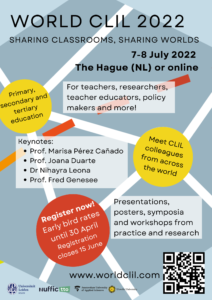
Want to connect with colleagues in the international CLIL community? On 7-8 July this year, ICLON will team up with Nuffic to host the World CLIL conference in the Hague. We promise a packed programme with a wide range of workshops on location and over a hundred presentations and symposia available to both on-location and online participants. Registration is open until the 15th of June, but why wait? See www.worldclil.com for more information.


References

Ball, P., Kelly, K., & Clegg, J. (2015). Putting CLIL into Practice. Oxford: Oxford University Press.


de Bot, K., 2007. Language Teaching in a Changing World. The Modern Language Journal, 91(2), pp. 274-276.


Coyle, D. (2015). Strengthening integrated learning: Towards a new era for pluriliteracies and intercultural learning. Latin American Journal of Content and Language Integrated Learning, 8(2), 84-103, doi:10.5294/laclil.2015.8.2.2


Coyle, D., & Meyer, O. (2021). Beyond CLIL: Pluriliteracies Teaching for Deeper Learning. Cambridge UK: Cambridge University Press.


Dale, L., Oostdam, R., & Verspoor, M. (2018). Searching for identity and focus: towards an analytical framework for language teachers in bilingual education. Journal of Bilingual Education and Bilingualism. 21(3), 366-383 DOI: 10.1080/13670050.2017.1383351


de Graaff, R., Koopman, G. J., Anikina, Y., & Westhoff, G. (2007). An Observation Tool for Effective L2 Pedagogy in Content and Language Integrated Learning (CLIL). International Journal of Bilingual Education and Bilingualism, 10(5), 603-624. doi:10.2167/beb462.0


van Kampen, E., Meirink, J., Admiraal, W., & Berry, A. (2017). Do we all share the same goals for content and language integrated learning (CLIL)? Specialist and practitioner perceptions of ‘ideal’ CLIL pedagogies in the Netherlands. International Journal of Bilingual Education and Bilingualism, Online first. doi:10.1080/13670050.2017.1411332


Koopman, G. J., Skeet, J., & de Graaff, R. (2014). Exploring content teachers’ knowledge of language pedagogy: a report on a small-scale research project in a Dutch CLIL context. The Language Learning Journal, 42(2), 123-136. doi:10.1080/09571736.2014.889974


Meesterschapsteam mvt (2022). Visie op de toekomst van het curriculum Moderne Vreemde Talen. Accessible via https://modernevreemdetalen.vakdidactiekgw.nl/wp-content/uploads/sites/6/2022/04/Basistekst-visie-4.4.pdf


Oattes, H., Oostdam, R., De Graaff, R., Fukkink, R., & Wilschut, A. (2018). Content and Language Integrated Learning in Dutch bilingual education. How Dutch history teachers focus on second language teaching. Dutch Journal of Applied Linguistics, 7(2), 156-176. doi:10.1075/dujal.18003.oat

Buiksprekers in onderzoek naar tweedetaalverwerving: Emily Felker’s dissertatie “Learning second language speech perception in natural settings”  0

Op 10 juni 2021 verdedigde Emily Felker haar proefschrift aan de Radboud Universiteit Nijmegen. Ze kreeg moeilijke vragen, en beantwoordde die stuk voor stuk met verve. De meeste vragen gingen over hoofdstuk 6 van haar proefschrift, het hoofdstuk waarin onderzocht werd of expliciete instructie over klanken nu nut heeft voor bewustwording en herkenning van die klanken door tweedetaalleerders. Kort gezegd is de uitkomst “ja” en kunnen we hieruit (weer eens) concluderen dat bewustwording door middel van expliciete instructie zinnig is voor het leren van een tweede taal, ditmaal op het gebied van klankperceptie.


Dit soort onderzoek is winst voor de taalonderwijspraktijk. Ik hoef leraren(opleiders) niet uit te leggen waarom we dit zouden willen weten. Maar dat geldt niet direct voor de andere hoofdstukken in het proefschrift van Felker. In de corona-tijd sprak ik mijn collega’s vaker buiten, op een terras, wel zo ontspannen. En zo kwam het voor dat mijn collega MVT-lerarenopleider mij vroeg naar het boekje dat ik op dat moment aan het lezen was. Enthousiast begon ik te vertellen over de ingewikkelde, nieuw-uitgevonden experimentopzet uit hoofdstuk 3 en 4 van het proefschrift…


Het buiksprekerparadigma

In dit experiment zit een echte proefpersoon tegenover een niet-echte, namelijk een bondgenoot binnen het onderzoek, een soort medeplichtige van de onderzoeker. Samen moeten ze puzzels oplossen en hebben ze daarvoor ieder een deel van de informatie op hun eigen computerschermen, en dit doen ze in het Engels. Daarbij moeten ze woorden aan figuren verbinden. Nu is de crux dat die bondgenoot een vreemd accent heeft; ze zegt telkens /i/ in plaats van /e/, dus bijvoorbeeld ‘bitter’ in plaats van ‘better’, en bovendien zegt ze /ie/ waar anderen /i/ zeggen. Als de proefpersoon dan de geschreven woorden “bitter” én “better” heeft om uit te kiezen voor het oplossen van de puzzel, dan moet de proefpersoon dus gaandeweg het experiment begrijpen dat dit een accent is (met e -> i en i -> ie), want anders lukt het niet om de puzzel correct op te lossen. Om ervoor te zorgen dat de medeplichtige een constante uitspaak heeft van dit accent, gebruikt de medeplichtige een heel arsenaal aan vooraf opgenomen zinnetjes en woorden. Om mijn collega beter uit te leggen hoe dit werkte, deed ik voor hoe de medeplichtige zich dan telkens kort achter haar computerscherm waarop de puzzel te zien was verborg, om te doen alsof ze in de microfoon praatte, maar in feite drukte ze dan op een knopje. Als een soort buikspreker.


Learning in natural settings?

Na mijn lange maar enthousiaste uitleg over dit nieuwe experimentele paradigma, reageerde mijn collega droogjes met “maar waarom zou je dat allemaal doen?”. En omdat de rest van de terrastafel al andere meer prangende onderwerpen besprak, bleef mijn antwoord op deze vraag uit. Daarom bij deze: waarom zou je een buikspreker-experiment uitvoeren? De titel van het proefschrift is “Learning second language speech perception in natural settings”. Hoezo is een buikspreker-paradigma een natuurlijke setting?


Dat heeft te maken met de eeuwige tegenstelling in onderzoek: zo natuurlijk mogelijk enerzijds, en zo gecontroleerd mogelijk anderzijds. Vóór het paradigma van Felker was er nog nooit gecontroleerd onderzoek naar het leren van accenten in taal in live-interactie. Nu kon Felker onderzoeken hoe tweedetaalleerders wennen aan een voor hen tot dan toe onbekend accent, en hoe ze dat accent gaandeweg leren met expliciete feedback (Buikspreker: “No not that one, you need bitter not beeter”).


Nieuwe mogelijkheden voor onderzoek

Dit paradigma opent tal van nieuwe mogelijkheden voor onderzoek naar tweedetaalverwerving: als je gecontroleerde gesprekken kunt inzetten in onderzoek, dan kun je bijvoorbeeld preciezer uitzoeken welk type feedback, op welk aspect, op welk moment, en door wie het beste werkt in interactie, zowel voor directe uptake als voor langetermijn-leereffecten. Je kan dit bijvoorbeeld inzetten om meer onderzoek naar feedback te doen bij perceptie, zoals in Felker’s onderzoek, maar het is uiteraard ook te gebruiken om uit te zoeken hoe je feedback in interactie op uitspraak, of op andere aspecten van productie het beste kunt inzetten. Vervolgens is er ook een heel scala aan experimenten te bedenken om uit te zoeken of het uitmaakt wie die feedback geeft: kan dat een peer zijn, of werkt het beter als het een docent is; in hoeverre maakt het uit of het een moedertaalspreker is of niet, et cetera.


Dus hier kwam mijn enthousiasme vandaan, het is niet direct toepasbaar in de praktijk, maar het onderzoek dat mogelijk is gemaakt kan ons wel weer meer leren over de mogelijke positieve effecten van feedback in interactie, toch één van de meest gebruikte vormen van instructie in een les moderne vreemde talen. Los van de theoretische en praktische implicaties van het nieuwe paradigma gun ik het de toekomstige onderzoekers die als medeplichtige in zo’n experiment meedoen: hoe grappig moet het wel niet zijn, om door de juiste combinatie van knoppen met opgenomen zinnen alle proefpersonen te doen geloven dat er een echt gesprek plaatsvindt.

Intercultural Communicative Competence in the Language Classroom: Is this where language education is headed?  0

Authors: Nivja de Jong and Tessa Mearns (members of Meesterschapsteam MVT)


One time is not enough, two times is a trend, and three times is a tradition

In June 2017, the LLRC (Language Learning Resource Centre) was ‘launched’ with a full-day programme by and for language teachers, language teacher educators, and language learning researchers. Most of those present were from Leiden University, unsurprising as the LLRC has as its central aim to bring together language teachers and researchers from the different Leiden University institutes involved in teaching languages: LUCL, LIAS, ATC, ICLON and LUCAS. On June 7th, 2019, the third full-day conference was hosted by the LLRC, this time on the topic of intercultural communicative competence with a focus on higher education. Professor Michael Byram (emeritus professor, Durham University) was the invited speaker of the day. Anyone who has ever heard of the term “intercultural communicative competence” knows the stature of Prof. Byram. Although again, most people came from Leiden University, both presenters and attendants were now more diverse.


“Why should the biologists get all the fun?”

This was a question posed by Prof. Byram during his keynote. He referred to the fact that in CLIL (Content and Language Integrated Learning), as the acronym already clarifies, it is usual to teach content whilst teaching language. So if biologists teach about biology whilst teaching language, what (fun) topics can and should language teachers use?

When teaching language, students and teacher(s) use language, and this language that is used is always about something. Teachers can to some extent choose the content for which the language will be used. If we agree that being a communicative competent user of a language, also means to understand (something about) the (sub-)culture of the language, it becomes apparent that a form of content in the language classroom can and should be “culture”. So biology teachers do NOT get all the fun. Language teachers can claim an enormous amount of interesting topics to teach, and this in turn will lead to learners that are more interculturally competent and language-aware.


A shared vision

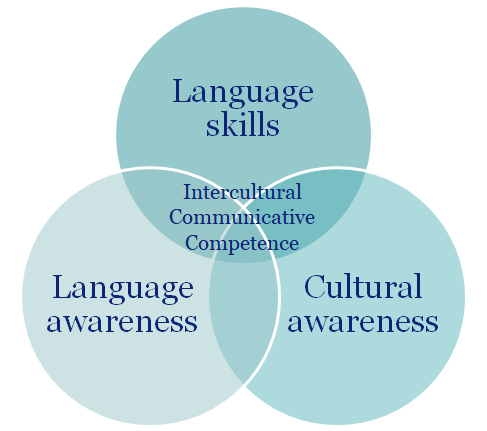
The same note was struck in the last lecture of the day, by the Meesterschapsteam MVT, who showed their model on language teaching for the Dutch curriculum: intercultural communicative competence is the core competence, and this core evolves from three overlapping learning outcomes: cultural awareness, language awareness, and language skills, as depicted in the figure below.


Figure: Learning outcomes for a content-rich Modern Languages curriculum (adapted from  Meesterschapsteam MVT’s vision on the future of Modern Languages education)


A question of ‘perspective’

Apt content to foster these competences can be specified by approaching ‘language’ from different academic perspectives: language as a structural phenomenon, language as a cognitive phenomenon, and language as a cultural phenomenon. Insights from such theoretical models have direct and fun implications for language teachers in their everyday practice. Instead of borrowing topics from other subjects (reading and talking about “panda’s eating bamboo”, “(made-up?) hobbies”, “the environment”), teachers can choose topics that are relevant for language: therefore choosing topics that are about structures of languages (from phonetics to discourse), about cognitive phenomena (from top-down processing while listening to Zipf-distributions or child language learning), about social phenomena (such as status of dialects, the effect of language and its power), and about cultural phenomena (ranging from stereotypes about cultures to literature and other forms of art). Biologist teachers get all the fun? No way! Language teachers get all the fun!


Support for a content-rich vision

The rest of the day’s presentations illustrated through practical examples how language teaching can include teaching about culture and developing intercultural competence (ICC). From the multilingual school to partnerships across international borders, language-and-culture-integrated literature teaching, assessment of ICC, to ICC training for university staff and students, the day presented us inspiration from a whole host of research findings and good practices.

Reform can only succeed if there is support at grassroots level. If the attendance and enthusiasm with which this conference was received are anything to go by then perhaps the vision of content-rich language education is not so far off the mark.


Next year’s LLRC Day will be held in June 2020 and centre around the theme ‘The interplay between practice, research, and theories in L2 learning’. Keep an eye on the LLRC website for more information.


De complexiteit van het organiseren van ruimte  0

In november verscheen in het tijdschrift Pedagogische Studien een themanummer over de professionele ruimte van leraren in het Voortgezet Onderwijs. Hoewel het onderzoek waarover wordt gerapporteerd in dit themanummer bijna 2 jaar geleden werd afgerond, is het thema nog steeds actueel. Ongeveer gelijktijdig verscheen namelijk het rapport ‘Ruim baan voor leraren’ van de Onderwijsraad en het advies van Rinnooy Kan ‘Verkenning leraren’, waarin wordt gesteld dat leraren vrijheid moeten krijgen bij de invulling van docentprofessionalisering. Uit de titels van deze drie publicaties (ruimte, ruim baan, vrijheid) zou je gemakkelijk kunnen afleiden dat het momenteel niet goed gaat met de ruimte/vrijheid van leraren in Nederland.

Is dat zo? In het themanummer van PS wordt de ervaren professionele ruimte van leraren in het voortgezet onderwijs onderzocht in de context van drie professionaliseringinitiatieven (Professionele Leergemeenschappen, Traineeships voor beginnende docenten en de Promotiebeurs voor leraren). Ook wordt het perspectief op professionele ruimte van schoolleiders onderzocht. Uit de vier bijdragen blijkt, kort samengevat, dat leraren in voortgezet onderwijs wel degelijk ruimte ervaren om te werken aan de ontwikkeling van de eigen onderwijspraktijk (individuele ontwikkeling), maar dat de ambitie tot olievlekwerking van eigen ideeën voor het verbeteren van de onderwijspraktijk naar collega’s niet zonder meer te realiseren is. De schoolleiding heeft hierin de uitdagende taak om de schoolorganisatie zo te ontwerpen dat docenten ruimte krijgen en kunnen nemen.

In de discussiebijdrage stelt Joseph Kessels dat er (te?) vaak naar ontwikkelingen in het onderwijs (waaronder docentprofessionalisering) wordt gekeken vanuit afzonderlijke elementen. Voorbeelden hiervan zijn werkdruk, motivatie, leercultuur, etc. Hij pleit voor het kijken naar scholen “als ecologische systemen, waarin niet de afzonderlijke interventies tot specifieke resultaten leiden, maar wel het complexe proces van diverse op elkaar inwerkende dynamische bewegingen”. Ook bespreekt hij dat huidige initiatieven in het kader van docentprofessionalisering veelal zijn gericht op de individuele docent waardoor ruimte om bij te dragen aan de schoolontwikkeling in het gedrang komt. Om dit (beter) te realiseren is een herontwerp van de schoolorganisatie nodig, waarin samenwerking tussen collega’s ten behoeve van het primaire proces vanzelfsprekend is in plaats van dat het door leraren als ‘extra’  wordt ervaren. Dit kan door het individuele lesgeven in klassen volgens een voorgeschreven lesrooster met verplichte leerstof te vervangen door vormen van onderwijs waarbij geredeneerd wordt vanuit de autonomie (of ruimte?) van de leerling.

Tot een dergelijk drastisch herontwerp van de huidige organisaties zal het niet snel komen. Wat mij betreft is het wel een oproep om als onderzoekers in nauwe samenwerking met de onderwijspraktijk de ambitie op te pakken een realistisch herontwerp van schoolorganisaties verder vorm te geven in de toekomst!


Link naar het themanummer: http://www.pedagogischestudien.nl/home